Romanian
 English


-
Judges urged to recommend conciliation between consumers and banks at the start of court proceedings
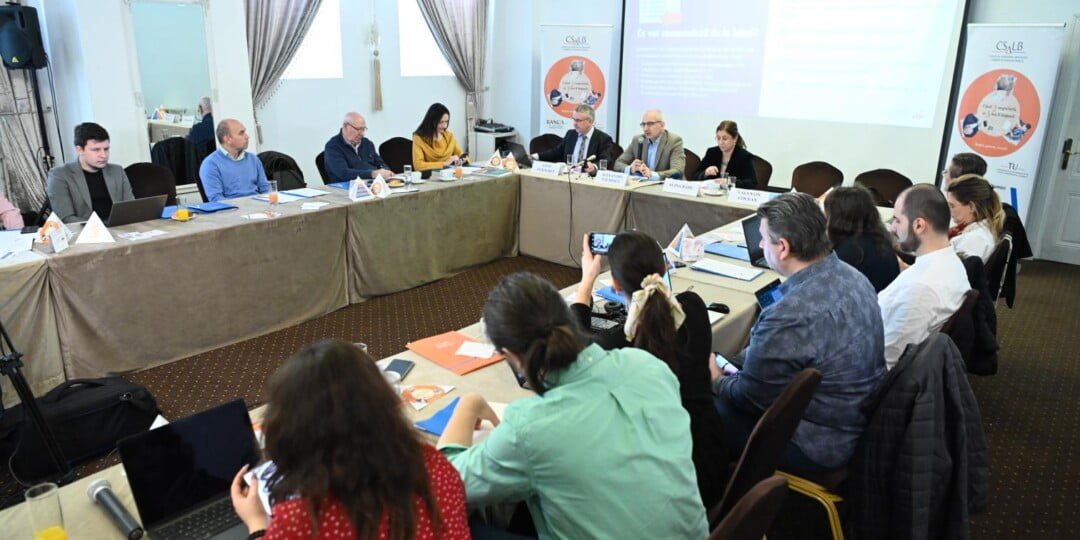
Judges are advised to recommend consumers and banks to have their court disputes settled amicably. Around 60 judges coming from tribunals, district courts and Courts of Appeal in a number of counties of the country attended the Conference organised by the National Institute of Magistracy (NIM) and the Alternative Banking Dispute Resolution Centre (ABDRC): “Consumer Protection: How to Choose between Alternative Resolution of Disputes and Court Proceedings?”
-
Contracts between consumers and banks should be simplified, and this may come with the development of digitalization in the banking industry. The Romanian legal framework obliges parties to conclude voluminous contracts with technical clauses that are difficult to understand. Many consumers read contracts only after they have problems paying their instalments, while others choose the costly option of going to court, even though amicable resolution at the Alternative Banking Dispute Resolution Centre (ABDRC) is free for consumers and takes less than a month on average. Here are some of the topics discussed in the third episode of #PodcasturileCSALB, featuring Alexandru Berea and Nela Petrișor, and moderated by Gabriel Bălașu. (more…)
-
An expected stronger role of ABDRC with the new legislative changes. For the whole range of loans, banks are required to prove previous attempts of restructuring the debts with payment delays longer than 90 days. Such restructuring should consider the consumer’s situation and include refinancing, deferral or stay of instalment payments, interest rate changes, currency conversions, or partial debt write-offs. All these measures can be found now in the Government Emergency Ordinance No 15/2024 (previously, in the Government Emergency Ordinance No 52/2016 on mortgage loans). Furthermore, these are also the solutions that conciliators have been proposing in consumer-bank negotiations ever since 2016, in conciliations held at the Alternative Banking Dispute Resolution Centre (ABDRC). Thus, this recently-adopted statutory obligation could increase the number of amicable settlements via ABDRC, for both loans that are threatened by enforcement, and those already in enforcement proceedings. Here are some of the topics discussed in the third episode of #PodcasturileCSALB, featuring Ciprian Chiorean and Mircea Stroe, and moderated by Vasile Coman. (more…)
-
While the country’s economy heavily relies on the financing the banking system is able to extend, bank representatives say that nothing erodes the trust between consumers and credit institutions like the populism displayed by some politicians and institutions. The effects are worsened by the low financial intermediation (less than a third of the European average), overcharging and the fines applied to banks in order to turn to good electoral account the negative perception of banks. Here are some of the topics discussed in the second episode of #PodcasturileCSALB, featuring Florin Dănescu (executive president of the Romanian Association of Banks) and Septimiu Stoica (CSALB conciliator, teacher, lawyer), and moderated by Emilia Olescu (Editor-in-Chief of BURSA Newspaper). (more…)
-
An X-ray of the banking system through the lenses of the big industry events occurred over the last 15 years is the focus of the first episode of#PodcasturileCSALB, featuring Alina Radu (ABDRC Conciliator and Partner lawyer) and Alexandru Păunescu (Legal Director of the National Bank of Romania (NBR) and President of the ABDRC Board), in a talk moderated byCornel Dinu (journalist and founder of Banking News). Who should take responsibility for unrepayable loans? How can the consumer-bank disputes be settled amicably? How did we get from conflict to negotiation between consumers and banks? What are the reasons why the National Bank of Romania could take over protection of the consumers of financial services and products? In 2024, the debates held in ABDRC will look into the financial and banking market news, and their impact on consumers, as well as into how Romanians related to credit institutions, but also to their personal finances in a volatile socio-economic background. (more…)
-
Since the beginning of the year, more than 650 consumers of financial services and products in Romania have invoked certain problems in their contracts/services with traders in the financial and banking sector and have asked banks/NBFIs for an amicable settlement, within the framework of the Alternative Banking Dispute Resolution Centre (ABDRC). By mid-March, the banks had accepted 175 negotiation requests (out of a total of 420 requests to the banks). Since the beginning of the year, 140 negotiations between consumers and banks have been concluded by reconciliation of the parties. In 98% of the negotiations this year, the parties reconciled. In 2023, the average value of benefits obtained by a consumer after negotiations with the bank within ABDRC was around €5,000. World Consumer Rights Day (“World Consumer Rights Day”) is marked every year on the 15th of March! This day promotes the rights and needs of consumers worldwide. (more…)
-
In 2023, ABDRC was approached by the highest number of consumers over the last 7 years, and banks accepted 15% more applications for negotiation than in 2022. The total benefits obtained by consumers from negotiations conducted via ABDRC in years 2016-2023 amounted to more than EUR 11.3 million. The record figure of the negotiation benefits was reported last year (EUR 3.3 million), i.e. more than 60% higher than in 2022. On average, a consumer obtained benefits of EUR 5,000 from a negotiation conducted last year. In fact, benefits of up to EUR 5,000 were reported for half of the agreements brokered by ABDRC. These amounts stand for reductions in the lending cost by: free reduction or removal; lower interest rate; lower instalments; and even writing off the entire debt.
-
The last two years have significantly altered the profile of consumers approaching the Alternative Banking Dispute Resolution Centre (ABDRC). After having reviewed the 5,560 applications for negotiation with banks/NBFIs filed to ABDRC in years 2022 and 2023, we see that the profile of the consumer of financial and banking services is that of a man of Bucharest, aged between 41 and 50 years, with a consumer loan in RON, who asks the bank for a renegotiation of their loan agreement or seeks to settled amicably a court dispute. In 2023, negotiations returned benefits (EUR 4,980) that are in average 16% higher than in 2021 and 97% higher than in 2019. (more…)
-
This year, the Alternative Banking Disputes Resolution Centre (ABDRC) recorded more than 400 cases (an increase of almost 200% compared to 2022) where banks initiated the negotiation process with consumers. Thus, in more than half of all negotiations conducted this year in the ABDRC (730 cases were formed in 2023, the highest annual number since 2016), amicable resolution proceedings were initiated by banks, who invited consumers to conciliation.
This happened after some banks reviewed their customer portfolios, and where they noted late payments, court disputes or other problems they could not resolve directly, they directed their own customers to fill in a request for negotiation on the website www.csalb.ro. The advantage of the banks’ initiative to resolve problems with consumers amicably is that it shortens the time it takes for the parties to reach a compromise (in some cases, cases are resolved within a few days) and makes credit institutions much more open to a solution that is favorable to the consumer.