How Much Should You Save to Be Financially Secure? Expert Recommendations

June 18, Bucharest. Saving is one of the most important indicators of societal well-being and the financial health of every family. The money we set aside can provide us with comfort in times of crisis, security during retirement, and even the ability to generate passive income through investments. When investing, it is essential to carefully choose financial instruments and properly assess risks. What are the most effective saving methods? How much of the family income should be secured? These questions were addressed in a podcast organized by the Alternative Banking Dispute Resolution Center (CSALB).

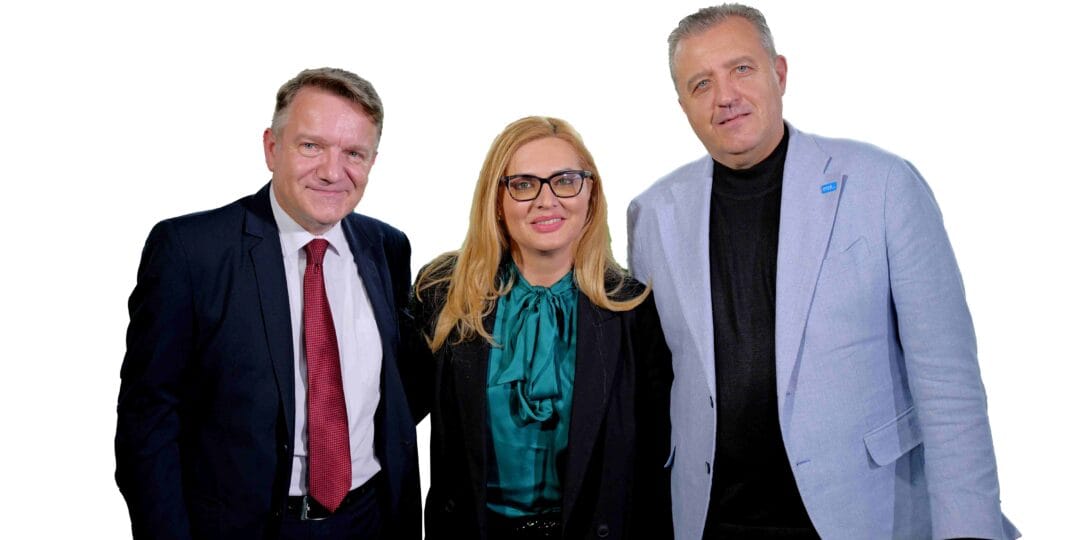
The investment and personal finance experts featured in the podcast are Adina Călin, Director at CEC Bank and Mihnea Bărbulescu, Executive Director at Erste Asset Management, in a conversation moderated by Adrian Căruceru, a personal finance expert.

| PODCAST CSALB | https://youtu.be/w1Zgg_wVqzc

Please accept preferences, statistics cookies to watch this video.

Al The fifth season of the CSALB Podcast focuses on themes inspired by the types of requests consumers submit to the Center for negotiation with banks: cards and payments, bank loans, fraud, foreclosures, court vs. alternative resolution, savings, and investments. This year’s episodes bring together banking professionals, credit brokers, bailiffs, anti-fraud specialists, and more. The discussions are moderated by financial analysts, financial education lecturers, and respected journalists in the economic press. The goal is to provide consumers with the necessary tools to manage and protect their finances in an unpredictable macroeconomic environment.

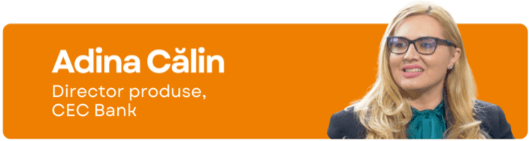
„The importance of saving lies in the habit of setting money aside – and this habit must be learned, as we are not born with it! In a consumerist society that constantly tempts you to spend, saving means both prudence and putting an end to waste. Saving methods can include postponing impulsive purchases, automatically transferring funds on payday, or creating foreign currency deposits that we’re less likely to break. A central pillar of personal finance is the income and expense budget. Simply listing your expenses on paper might show that a quarter or more of them are unnecessary, and cutting them won’t affect your quality of life – quite the opposite. Unfortunately, many people abandon budgeting after a few months and revert to habits that led to financial difficulty. But saving doesn’t just come from cutting costs (which has its limits), it also comes from increasing income. So, how much should we save and when are we ready to invest part of what we’ve saved?

Someone who uses a personal budget can save 5–10% of their monthly income just through planning. Saving is, above all, a good habit that can change your life and provide peace of mind when you’re less prepared. A simple rule for income allocation would be: 20% for savings, investments, insurance, and pension; 30% for wants (travel, entertainment); and 50% for needs (food, rent, transport). That 20% for saving should be set aside at the beginning of the month, immediately after receiving your salary. If you wait until the end of the month, you’ll likely find something to spend it on. That percentage is a recommendation – you can start with just 1% or 2%, the key is to establish the habit. If we consider that Romanians spend 8–9% of their income on vices like alcohol and cigarettes, and only 2% on education, it becomes clear that savings goals are achievable. One helpful method is delaying purchases. For example, if you really like something, wait a few days before buying it. After 2–3 days, you might realize it’s no longer that important or appealing. As a result, you might give it up or reduce the purchase – instead of buying three T-shirts, you buy just one that you really like.”

Today, knowing how to save is just as important as knowing how to use a smartphone. That’s why economic awareness is a necessity, not a choice. The investments you make with your savings should not be seen as a way to get rich quickly, but as a way to preserve the value of your money – its purchasing power. Technology helps, as many financial institutions offer automated savings and investment tools. There are three main pillars of saving: set aside 20% of your monthly income, build an emergency fund worth 6–12 months of your expenses (depending on your job stability), and for retirement, save 25 times your annual expenses. You should only consider investing after achieving a stable income and a healthy savings buffer. Many Romanians with financial success still prefer conservative options like bank deposits and government bonds. However, you must ensure these outpace inflation. For example, in 2022, inflation reached 14%, while the return on deposits and bonds was around 7% – a negative gap of 5–6 percentage points. Those investing in real estate must also consider the high liquidity cost. If you urgently need cash, real estate isn’t easy to liquidate. Globally, there are over 300,000 investment options – stocks, funds, ETFs, government securities, financial instruments – and by 2040 this could rise to 1 million. That’s why financial education is essential, so you know what to choose and whom to trust with your wealth, however big or small.”

Alexandru Păunescu, representative of the National Bank of Romania on the CSALB Coordination Board, adds:

“The macroeconomic challenges consumers and society face in the near future make financial education an indispensable and ultimately profitable tool for overcoming difficult times. Personal budgeting becomes a must in a financial context marked by variable interest rates, fiscal changes, and other factors that can impact loan repayment capacity. At the end of March 2025, the rate of non-performing loans reached 2.53%, a slight increase from December 2024 (2.48%). In this context, saving becomes essential to maintaining financial stability amid economic disruptions. People can adopt strategies such as reducing expenses, increasing income, and making smart, safe investments to grow or at least preserve their savings – for example, in bank deposits within legal limits.

Long-term saving can also act as training for taking out a future loan or even serve as the down payment for purchasing property. The ability to save, when consistently practiced, can make the difference between a worry-free life and one filled with financial hardship. We encourage all consumers to save – no matter how little, but consistently – to ensure at least a minimum level of financial protection during life’s tough periods, regardless of their nature.”

***

About CSALB: CSALB is an entity established following a European directive, offering free and quick mediation—under three months—between consumers and banks or non-bank financial institutions for ongoing contracts. Consumers from any Romanian county can submit requests to the Alternative Banking Dispute Resolution Center (CSALB) by filling out an online form on www.csalb.ro. If the bank agrees to enter negotiation, a conciliator is appointed. CSALB works with 16 of the top legal and financial experts in Romania. All cases are settled amicably, and the resulting agreement holds the legal power of a court decision.


Download